Thursday, September 22, 2016

GMOs, Good or Bad?


In the article the writer discusses several views on GMOs and if and how they affect the health of the public.  Frankenfoods have become a very controversial topic with companies eager to slap a "Non-GMO" label on their products. While the science behind whether these GMOs are ill for your health is unknown in both corners of the ring, many people have taken it upon themselves to voice their opinions online. The writer brings in the opinion of a person to impose this fear of chemicals in non organic food to add to the public's growing chemophobia.
 Image result for frankenfoods


More than 90% of the corn and soy that is produced in the United States is genetically modified and shows no signs of adverse affects. A study in Russia was preformed on mice that were only fed GMO soy led to a lack of fertility after three generations. What this fails to mention is any notion of other trials that reproduced this effect and who preformed the study. There was no accreditation to the conductor of the experiment. This lack of fertility could have been caused by a multitude of factors including the genetic lineage, environmental conditions, lack in proper nutrition and key amino acids since soy will cause a deficiency in cysteine.

                                   Image result for corn

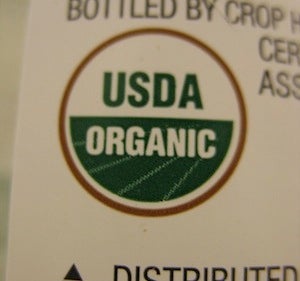
The article suggests avoiding harmful chemicals like pesticides and herbicides by consuming organic foods. “You won’t find the chemicals in organic food.” The USDA defines organic as an item that must have an ingredients list and the contents should be 95% or more certified organic, meaning free of synthetic additives like pesticides, chemical fertilizers, and dyes, and must not be processed using industrial solvents, irradiation, or genetic engineering. The last 5% must abide by the list provided by the USDA.
Limiting Toxic Chemical Exposure in African American Women’s Hair Salons


In an article in The Atlantic, Vicky Gann, explains how toxic chemicals have made their way into certain hair salons and what is being done to address this problem.  A wide variety of potentially harmful chemicals are used in salons that cater to African American females.  Although this is a concern for the health of the patrons of these establishments, the workers have a much greater likelihood of suffering from ill effects due to their continuous exposure. Teni Adewumi, a graduate student at the UCLA Fielding School of Public Health, surveyed workers at salons in Inglewood, CA and found that complaints of certain health problems were unusually common.   Adewumi believes that these are the effects of toxic chemical exposure and she is working to ensure that hairstylists’ environment is not making them sick.

Due to the large variety of different types of hair styling products, there is a wide range of chemicals that beauty workers get exposed to.  Styrene, formaldehyde and tricholoroethylene are commonly found in products used to treat hair, such as glues and straighteners, and these chemicals have been linked to liver damage, dermatitis and cancer.  Studies that focus on the health risks of individual chemical compounds used in the beauty industry are not uncommon, but when people are exposed to an assortment of different chemicals it can be difficult to know what the long term effects could be.  More research needs to be done to better understand the additive effects of hairstyling products. 

Adewumi has been working to educate hairstylists about the risks associated with the use of hairstyling products, as well as which products to avoid. She stresses the importance of ventilation, label comprehension and using the appropriate protective equipment.  Aedwumi would like to see government regulation that ensures that all hair care products have the ingredients listed on the label and that chemicals that are known to be hazardous are strictly prohibited from being used in the manufacturing of these products.   Although we may be able to prevent all toxic chemical exposure in beauty salons, there is a lot that can be done to make this environment safer for workers and patrons alike. 


Thursday, September 15, 2016

The Modern Day Godzilla

Along with giving us annoying bug bites, in parts of the world they are the vector for the spread diseases and Illnesses like malaria, yellow fever, and zika virus to man kind. So if you were given the tools to eliminate mosquitoes from the face of the planet would you do it? The ethics of this question needs to be considered.


Right now efforts to prevent mosquito bites are using insecticides, repellent, traps, mosquito-larva- eating-fish, and bed nets etc.

The mosquito is not the directly the problem, it’s the diseases that they carry. But only a few species carry and transmit disease. Plasmodium falciparum is an example of a species of mosquito that carries the malaria parasite. There are thousands of species of mosquitoes but only a few are vector for transmission of diseases so eliminating all of them using pesticides would not be smart. Using pesticides kill the bad and good insects indiscriminately which is a major problem.


In response to this scientist make developed a ways to target the species that we want to focus on. species . One such method is CRISPER- Cas9 that disrupts the fertility of female mosquitoes. It starts in a lab where the gene is injected into the fertilized eggs. It works by inserting itself into both chromosomes of the DNA so that all gametes of the mosquito have the gene. It then it propagates through a population to wild female types by altered males. All offspring have the gene if male if altered. Altered male offspring can then go and continue spreading the gene while altered female offspring are no longer about to reproduce. this method is more successful then others because the gene it able to copy its self in to both chromosomes of a pair. Also mosquitoes can't develop a resistance like they can with pesticides.


There are ethical and other unforeseen concerns about the decision to use this technology. Some feel that it is not right to do ahead and wipe an entire species. Others don't think of the mosquito as significant enough to care about preserving it. However since mosquitoes don't travel far from where they where born researchers don't think it will have a complete annihilation affect. But it will severly decreases the regional populations when it is needed. Some people also worry about the potential for this to used as a biological weapon if it gets into the wrong hands.


Some unforeseen problems a very likely to appear. The elimination one of the species that carries may lead to the rise of another. One species West Nile Virus does poorly in the the presence of a species that carries malaria. So the West Nile virus containing mosquito may become a problem when the malaria containing population has decreased or been eliminated.

In certain area mosquitoes are also seasonal reservoirs of food for animals such as migrating birds in the arctic tundra.

The decision we face of whether or not to develop and use CRISPER-Cas9 method on mosquitoes is kind of like Dr. Sarisawa's dilemma. He had to choose whether or not to allow the use of the oxygen destroyer to be used on Godzilla. Now we have to decide whether or not to use these new methods on mosquitoes because although their bites are harmless, what can be transmitted is not. The figure below shows a comparison to the annual deaths for mosquitoes and other animals that many people fear and think of as killers.

Images and story are from and on the Mosquitoes are from the Smithsonian magazine.

Wednesday, September 14, 2016

Chemicals Lurking in Every Crevice of Life

Toxic chemicals were found to be present in many household items and could potentially cause harm. Meera Senthilingam details a study by a research group out of George Washington in a CNN article. Toxic chemicals were found to be present in 90% of all households in the United States. An astounding 45 toxic chemicals were discovered to be commonly found in homes. The chemicals were divided into 5 classes.

Phthalates, which are commonly found in flooring, blinds, and food packaging, were in the highest concentration. Possible reproductive problems and risks to child development are some of the adverse affects Phthalates can induce. Flame retardants, which don't bond to the products, had the highest chance of intake. Even though these chemicals are in trace amounts, they can add together and have an impact on health. Brandman, a commenting scientist, drew a comparison between this study and lead exposure. He noted that just like in the case with lead, "exposure is not acceptable." The article suggested several ways you could actively combat these toxic chemicals in your home. 

Suggestion included dusting with a HEPA filter equipped powerful vacuum to remove dust and particles, washing your hands, and creating flame retardants with better adhesion so they don't enter the body. The beginning of the article includes a slide show of 12 plants that can absorb different chemicals. Some of these included the Caribbean Tree Cactus, which removes ethyl benzene found in food packing, furniture, garden care products, and toys. Another example was decorating your home with the Peace Lily, which absorbs electromagnetic radiation coming from computers and printers. The final suggestion was to download the app Detox Me from the Silent Spring Institute. The app lists possible sources of toxic chemicals and tips to minimize exposure. Overall, the articles paints a picture of chemicals lurking around the corner, waiting to jump out and attack you and your children from all kinds of unsuspecting sources. If you arm yourself with knowledge, a powerful vacuum, and a plant, the toxic chemicals might not have a chance to jump out at you. 

Wednesday, September 7, 2016

Evolution of Superbugs: Treating Anti-biotic Resistant Infections

The effectiveness of coliston, a drug of last resort in treating anti-biotic resistant infections, is threatened by new strains of E. coli, that are beginning to turn up in the United States.  Originally identified in hogs on a Chinese farm, the resistant strain has turned up in 30 countries.  Tom Philpott, in a recent article in "Mother Jones," discusses a new paper that asserts that the microbes have been in the US for at least two years.  The new strain is also resistant to carbapenems, a class of antibiotics also used to fight anti-biotic resistant microbes.  The new strain is particularly dangerous because its anti-biotic resistance moves quite readily between species by means of DNA fragments called plasmids.  The propagation of resistant microbes has been much accelerated by the use of anti-biotics in animal feed.  FDA figures show that 80% of anti-biotic production in the US goes to animal feed. Philpott notes an "Atlantic" article by Mary McKenna that showed that human UTI infections are increasingly linked to resistant microbes from poultry products.  The US poultry industry is beginning to cut down on the use of anti-biotics in feed and has never used coliston.  In China anti-biotic use including coliston is on the increase.


Coliston whose structure is shown below was discovered in the 50s and shelved because of side effects. As is evident from the structure the molecule is a cyclic pseudo peptide that must be injected.

The side effects seem to be temporary, and the severity of the threat of infection by resistant strains justifies the use of an injected drug and the risk of the side effects.  As always, the use of chemistry in medicine requires carefully controlled study and balance.  But without it we would be we would have limited defenses against communicable diseases.

Wednesday, April 20, 2016

Electricity from Magnetism: New Way


The physicists has used the "inverse spin Hall effect" works in many organic semiconductors and carbon-60 buckyballs. However, the University of Utah physicists changed magnetic "spin current" into electric current. The efficiency of this new power conversion method isn't yet known, but it might find use in future electronic devices including batteries, solar cells and computers. The study also showed that the conversion of spin current to electric current works in organic semiconductors, also known as "spin-orbit coupling." This process is found in inorganic conductors and semiconductors. Even though this phenomenon in inorganic and organic materials works in various ways. This coupling is much weaker in organic than in inorganic semiconductors, but the big thing that came out of this experiment was the discovery of an experimental method sensitive enough to reliably measure the weak effects in organic semiconductors.


The upper part of this illustration shows the device, built on a small glass slide, that was used in experiments showing that so-called spin current could be converted to electric current using several different organic polymer semiconductors and a phenomenon known as the inverse spin Hall effect. The bottom illustration shows the key, sandwich-like part of the device. An external magnetic field and pulses of microwaves create spin waves in the iron magnet. When those waves hit the polymer or organic semiconductor, they create spin current, which is converted to an electrical current at the copper electrodes.
Credit: Kipp van Schooten and Dali Sun, University of Utah


Link to the Article